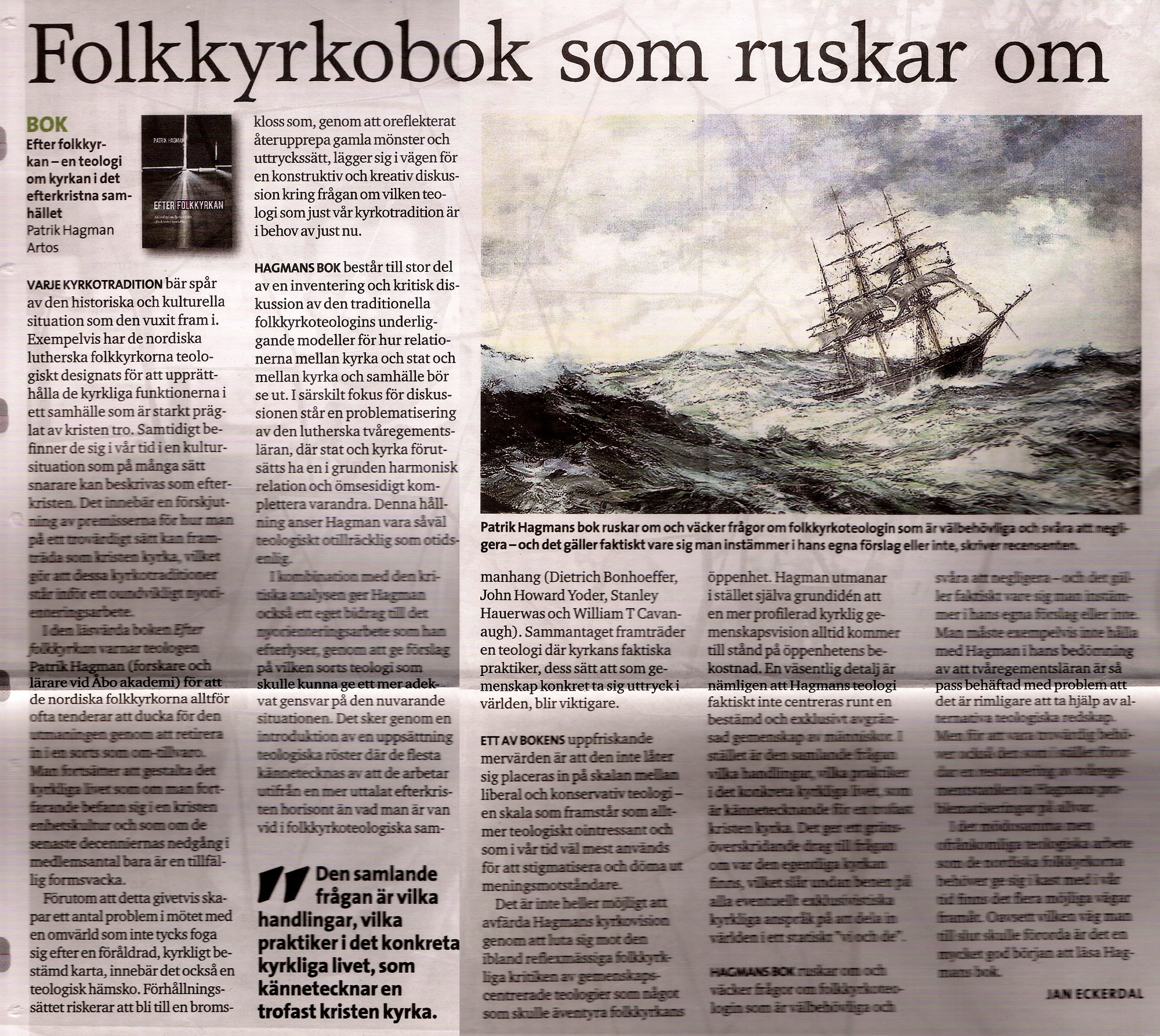
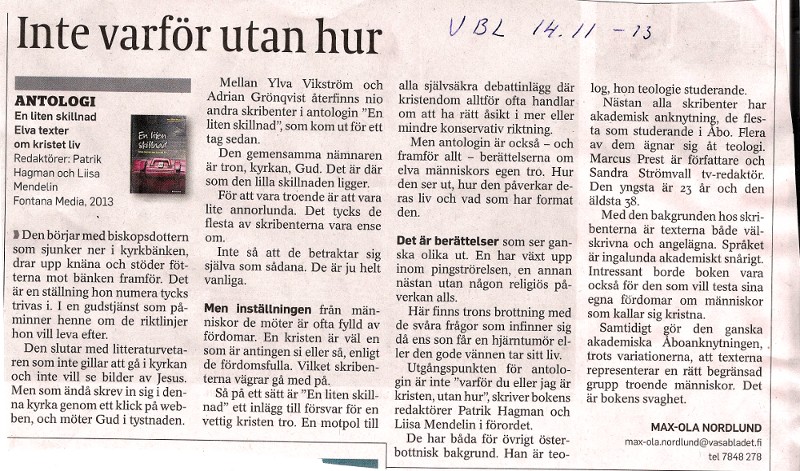
För en stund sedan bekräftades mitt baptistiska dop av en präst i Finlands Evangelisk-lutherska kyrka. Så snart den webblankett jag nyss fyllde i behandlats blir jag medlem i Väståbolands svenska församling.
Det här är, som de som känner mig vet, resultatet av en lång process. Men jag vill vara väldigt tydlig med hur jag ser på den processen. Det handlar inte om att jag skulle fjärmats eller teologiskt börjat uppfatta min baptistiska och frikyrkliga bakgrund som problematisk eller felaktig och därför bytt till den lutherska bekännelsen.
Orsaken är på ett plan praktisk. Jag bor på en ort där det inte finns någon baptistförsamling. Under de år vi bott i Pargas har jag regelbundet deltagit i gudstjänsterna och firat nattvard i kyrkan i Pargas. Min fru hör till den lutherska kyrkan och vi lät döpa (och begrava) vår son i kyrkan i Pargas. Jag har i praktiken länge tänkt på den som ”min” församling. Rent teologiskt är allt annat absurt än att man hör till den församling där man firar nattvard regelbundet. Rent teologiskt har jag alltså hört till församlingen länge. Tanken att en blankett på webben avgör mitt församlingsmedlemskap är en typisk modern dumhet.
Det ändrar inte på det faktum att Vasa Baptistförsamling är och förblir den församling där jag växt upp och lärt mig vad kristen tro handlar om. Även om min teologi idag har lika mycket inslag från katolsk och ortodoxt håll som från den anabaptistiska traditionen (och frikyrkligheten mera allmänt) så ser jag det på ett plan som att jag nu kommer att försöka vara trogen mitt frikyrkliga arv inom den lutherska kyrkan i Finland. Givetvis inte genom att försöka förvandla församlinge i Pargas till en baptistförsamling (som om jag hade några möjligheter till det), utan helt enkelt genom att som medlem leva ut min kristna tro som jag fått i baptistförsamlingen i Vasa och inom Finlands svenska baptistsamfund.
Frågan är kanske varför det dröjt så länge. Svaret är givetvis att teologin ställt till det för mig. Även om jag älskar det sätt som gudstjänsten firas i lutherska kyrkor i Finland, och speciellt psalmboken blivit en hörnsten i mitt trosliv, måste jag i ärlighetens namn säga att specifikt luthersk teologi, vare sig i mera konservativa eller liberala former, knappast ens tar sig upp på top fem när det gäller min egna teologiska övertygelser och preferenser. Som tur är förväntas jag inte ta ställning till lag och evangelium, tro och gärningar, eller de fullständigt absurda beskrivningar av katolsk klosterliv som förekommer i den lutherska bekännelselitteraturen. Lika lite (tack och lov!) till de fördömande av ”vederdöparna” som finns där. I samband med min konfirmation i kväll läste jag den apostoliska trosbekännelsen. Niceanum hade fungerat lika väl.
Jag tänker mig att det faktiskt är rätt få medlemmar eller präster i lutherska kyrkan som personligen håller med om allt i bekännelseskrifterna. Man kan anse att detta är ett problem, dvs att bekännelseskrifterna inte alls i praktiken har den roll de förutsätts ha officiellt. För mig som teolog har det här ändå varit ett större problem än för de flesta som döpts in i den lutherska kyrkan som barn. Kanske problemet finns kvar. På sistone har ändå det absurda i att jag som formellt icke-medlem och som en som inte bidrar till kyrkans ekonomi blivit allt aktivare i församlingen. Praktiken har besegrat teorin.
Jag antar att detta val kommer att – mot min vilja – tolkas som ett ställningstagande mot baptismen för lutherdomen. Eller, ännu värre, mot de baptistiska gemenskaper som format mig och lärt mig känna igen kristendomen. Inget kunde vara längre från sanningen. Men man kan inte kontrollera hur folk tolkar.
Jag kommer fortsättningsvis vara en teolog för den kommande förenade Kristi kyrka. Jag kommer fortsättningsvis att prata om församlingsgemenskapens betydelse när jag talar till lutheraner och om nattvardens betydelse när jag talar till frikyrkliga. Men nu kommer jag också att göra det som medlem av en konkret lokal församlingsgemenskap på min hemort. Det är det avgörande.
Sist och slutligen ett mycket litet beslut, fattat efter en mycket lång period av övervägande.

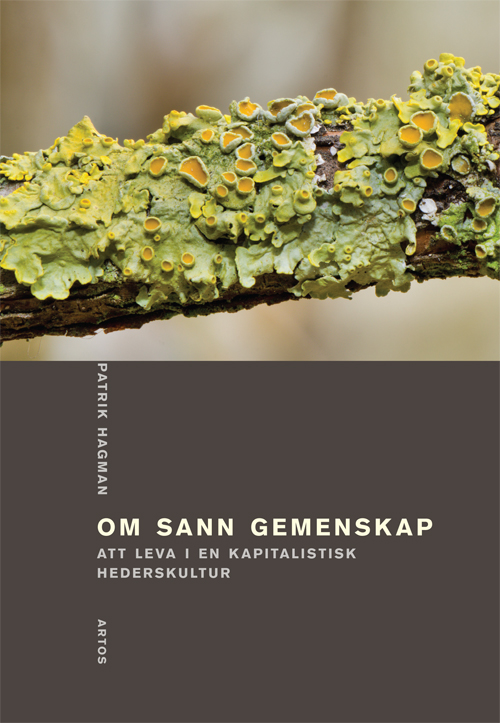 Min nya bok går nu att beställa (t.ex. här)! Den är i samma stil som Om kristet motstånd men kan givetvis läsas fristående. Här är baksidestexten: