WRITTEN BY Marvi Karim, MASTER’S STUDENT, ÅBO AKADEMI UNIVERSITY
The images of borders are usually considered to be the lines that are drawn on the map, yet the strongest and most damaging boundaries are those that can be identified by the legal systems and the design of institutions. In northern Pakistan, Gilgit-Baltistan (GB), a region I proudly call home, is a vivid example of the lack of constitutional status that can produce the unseen but significant form of exclusion. Despite its geopolitical significance and a population of more than two million, GB is not formally part of the Constitutional organization of Pakistan. The strategic exclusion serves as a structural frontier as it limits the right to political participation and rights guaranteed by the constitution.
This type of legal vacuum has contributed to structural exclusion, and my blog makes use of the Monopoly Paradigm of Hilary Silver and the Capability Approach of Amartya Sen. These theoretical models assist in making us comprehend how institutional and legal boundaries may deprive the individuals of the possibility to lead a full life in the national life, which leads to the actual deprivation of human and social injustice.
Gilgit-Baltistan and Its Constitutional Void:
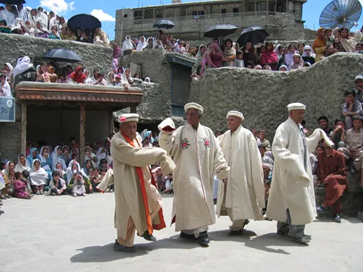
Gilgit-Baltistan, where I grew up, is situated at the extreme north of Pakistan with China, India and Afghanistan as its neighbors. It has almost 2 million residents of different ethnic and language backgrounds. Although the province of GB has a certain geographical significance and contributes to the China-Pakistan Economic Corridor (CPEC), it is not constitutionally a province of Pakistan (Waseem, 2013). Such vagueness puts the region in a legal and administrative quandary, which heavily hinders the rights of the residents to civil, political, and economic liberties.
According to Hilary Silver (1994), there are three social exclusion paradigms, which include solidarity, monopoly, and specialization. The marginalization of GB compares well with the monopoly paradigm, whereby the actors of power overtake access to the political and economic institutions. The history of the relegation of Gilgit-Baltistan can be traced back to the Karachi Agreement of 1949, when the federal government and AJK officials determined the destiny of the area, which not even one representative of the region attended (Dawn, 2015). This institutionalization of governance introduced a trend of governance that deprives the people of GB of constitutional and political representation.
The Implication on Livelihood and Capabilities:
The capability approach developed by Amartya Sen (2000) postulates the exclusion of individuals as the deprivation of a person to live the life they consider valuable. The citizens of GB, including many communities I have personally seen striving for basic opportunities, are experiencing discrimination in receiving good education, healthcare, infrastructure and job opportunities. These institutional and structural constraints curtail their ability thus leading to an instance of systemic social exclusion.
The region faces a high unemployment rate among youth, inadequate schools, the lack of medical care, and poor infrastructure (Government of Gilgit Baltistan, 2023). GB is also left out or allocated disproportionately less in federal development plans and subsidies. The region is frequently bypassed by public sector employment, scholarships and development funds, which strengthen economic and political marginalization.
Sidelining in Mega-Development Projects:
The omission of Gilgit-Baltistan is quite noticeable in CPEC. Although the corridor literally starts at GB and facilitates the connectivity of Pakistan with China, there is no representation of the region at the CPEC planning and consultative forums. According to Dawn, GB was not a part of the decision-making structures of the CPEC, and the region did not have any significant hydropower or economic zone developments, even though the location was considered strategic and had resource potential (Shigri, 2016). The process of acquiring land to build infrastructure has also raised dissatisfaction since it has not been well consulted and compensated.
According to the model developed by Silver, GB can be symbolically included – the area is depicted as something that is important to the national growth, but the individuals there do not take an active part in the decision-making process. Waseem (2013) calls this imbalance one of the old center-periphery dynamics in Pakistan.
Deficit in Education and Infrastructure:
There is chronic neglect of the education sector in GB. There are a lot of regions where there are no facilities for secondary school, as higher education facilities are very few. Gender literacy in women is still low because of the culture and the lack of educational facilities. The road network is weak, especially during winter, which isolates the whole community.
Such infrastructural voids echo with the points of Sen that the inability to perform can be converted into ostracism. People have no means to engage in the broader economy and society without any means of transport, market access and digital connectivity.
Conclusion:
As someone from Gilgit-Baltistan, I have witnessed how exclusion is not necessarily palpable in conflict or discrimination but can be entrenched in legal systems and everyday practices. Exclusion as pointed out by Sen (2000) and Silver (1994) is a multidimensional process that restricts rights and opportunities.
The GB people need constitutional clarity, representation, and fair development. It is not a question of governance only, but it is a question of justice to take care of these exclusions.
About the author: Marvi Karim is a master’s student in Social Exclusion at Åbo Akademi University, originally from Gilgit-Baltistan, Pakistan. Her academic interests focus on inclusion, community development, and the intersections of policy and lived experience in marginalized regions.
References:
Nagri, J., Naqash, T., & Ali, Z. (2015, August 9). ‘Almost’ Pakistan: Gilgit-Baltistan in a constitutional limbo. Dawn. https://www.dawn.com/news/1198967
Shigri, A. A. (2016, January 11). No space for GB on CPEC table. Dawn. https://www.dawn.com/news/1232094
Silver, H. (1994). Social Exclusion and Social Solidarity: Three Paradigms. International Labour Review, 133(5-6), 531–578. Available at: https://www.researchgate.net/publication/247563087_Social_Exclusion_and_Social_Solidarity_Three_Paradigms
Sen, A. (2000). Social Exclusion: Concept, Application, and Scrutiny. Social Development Papers No. 1. Asian Development Bank.
Waseem, M. (2013). Federalism and the Centre-Periphery Relations in Pakistan. Pakistan Vision, 14(2), 15–39. Available at: https://pu.edu.pk/images/journal/csas/PDF/14_V28_1_2013.pdf
UNDP. (2021). Pakistan National Human Development Report.
Government of Gilgit Baltistan. (2023). Annual Development Program 2023-2024. Retrieved from https://gilgitbaltistan.gov.pk/storage/downloads/sAYXiVVHsjVmc790ZCgIkawzwk38Nm-metaQURQIDIwMjMtMjRfMjM1ODA1Njk1LnBkZg==-.pdf